
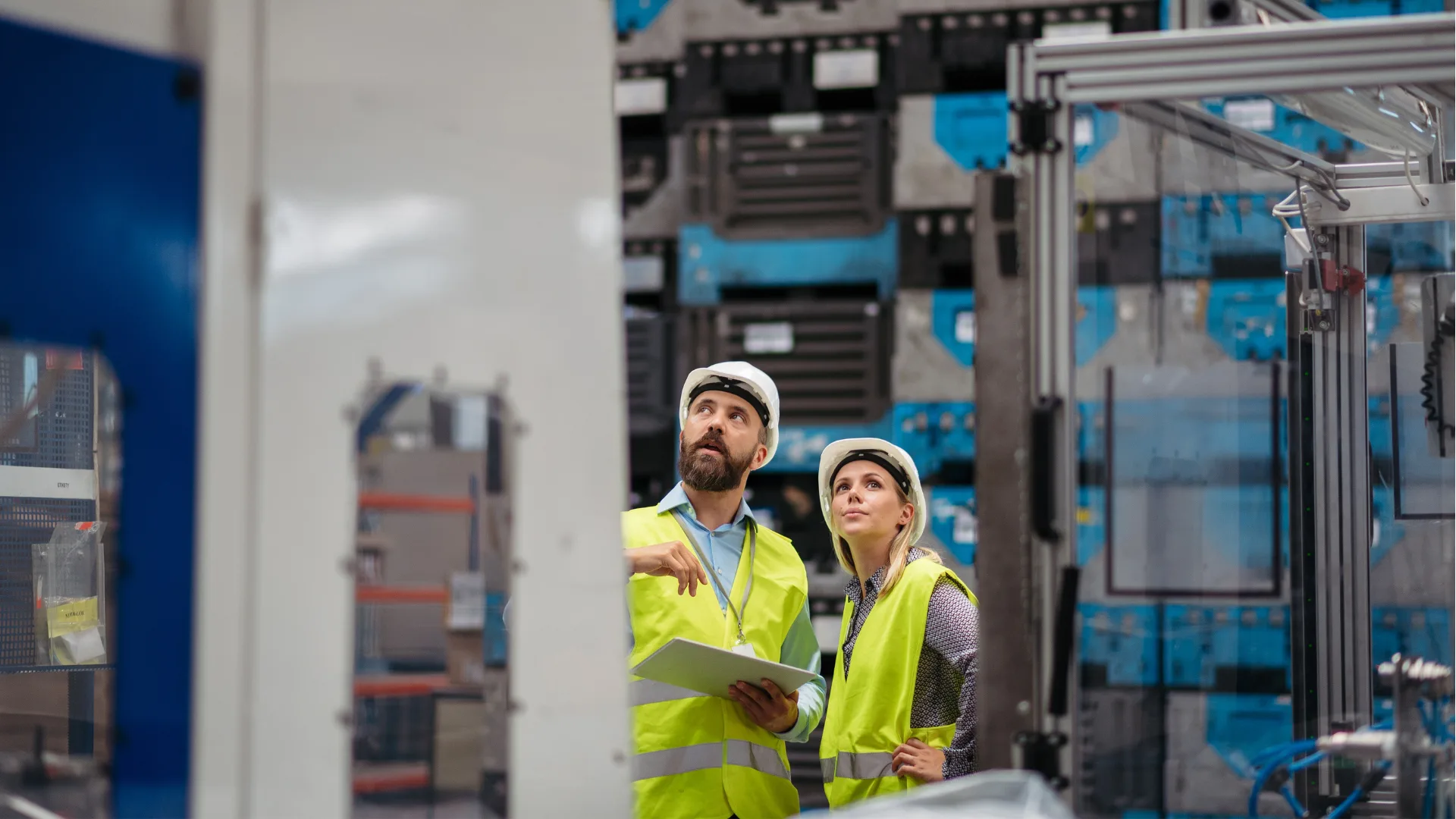
In the online environment, the digitization of processes has brought agility and control within corporations. However, many companies face a different scenario: files have been digitized, but access to useful information has become more complex than ever.
As recent analyses on the use of data in companies highlight, organizations possess more information than ever before, but still face difficulties in transforming this volume into accurate and agile decisions. An analysis published by InfoMoney addresses precisely this paradox between the availability of data and the difficulty of using it strategically.
In this way, the data overload And the dispersion of documents has become one of the main silent bottlenecks for the technical teams.
Therefore, engineers, reliability specialists, and maintenance technicians deal daily with voluminous collections composed of manufacturer manuals, CAD drawings, component specifications, work orders, and intervention histories.
Therefore, when this volume of files grows without an intelligent search structure, operational knowledge becomes fragmented. Understanding the dynamics of this overload is the first step in giving teams back their time to what really matters: technical analysis, asset reliability, and strategic planning.
What is document overload and how can AI help?
Document overload manifests itself in the time, friction, and cognitive effort required to locate, validate, cross-reference, and interpret data contained in multiple formats and repositories.
The current corporate challenge lies precisely in the mismatch between the excess of accumulated data and the scarcity of... insights Ready for use. This scenario, also discussed in an analysis by Época Negócios about data overload and a lack of insights, shows that accumulating information does not necessarily mean being able to use it efficiently.
Many companies believe that scanning documents or saving PDFs to shared network folders solves the information challenge. In practice, a scanned document remains unstructured data. If a professional needs to open ten different files to check the specifications of a valve or the tightening torque of an engine, the information exists, but it is not accessible.
Therefore, Paipe performs services such as Smart Doc Analyzer, which serves precisely to utilize AI and integrate agility when storing and using documentation.
What are the practical impacts of excessive data on operational routines?
Excessive data and fragmented documentation raise questions about the efficiency of plant design and the safety of interventions.
1. Excessive time spent on operational searches.
Highly skilled professionals spend hours searching for updated manuals, single-line diagrams, or reports from previous interventions. This time spent on location tasks reduces their ability to dedicate to reliability engineering and process improvement.
2. Dependence on more experienced professionals
When industrial technical documentation is scattered, practical knowledge tends to be concentrated in the memory of long-serving employees. Teams constantly refer to these references to find out where a particular plant archived a diagram or what criteria were used in past maintenance. This dynamic creates bottlenecks and overburdens senior specialists.
3. Uncertainty about the correct version of the document.
The proliferation of copies, project revisions, and field notes makes it difficult to immediately identify the current document. Working based on an outdated drawing or an obsolete technical specification increases the risk of rework during assembly and compromises the integrity of the assets.
4. Slow response to field inquiries.
When an anomaly occurs on the production line, the speed of diagnosis depends on how quickly the historical data and manufacturer recommendations can be consulted. Difficulty in correlating data delays action and increases the average repair time.
Traditional document management vs. an intelligent approach with AI.
The transition from conventional consultation methods to artificial intelligence-based systems is changing the way knowledge circulates in technical fields:
| Comparison Criteria | Traditional Document Management | Management Supported by Artificial Intelligence |
| Data Location | Search by exact keywords or manually browse through folders. | Contextual interpretation and semantic extraction of information. |
| Crossing of Sources | The professional opens and compares files manually, one by one. | AI combines manuals, historical data, and standards into a single response. |
| Traceability | A hazy history and reliance on the memory of experienced technicians. | Centralized data with precise identification of the source document. |
| Team Focus | A large part of the workday is dedicated to document screening and verification. | Focus directed towards critical analysis, engineering, and decision-making. |
How does Artificial Intelligence make technical resources accessible?
The application of Artificial Intelligence to technical documents is not intended to replace human judgment, but to eliminate the friction between the operator's question and the documented answer.
Through Intelligent Document Processing (IDP) techniques and language models tailored to the industrial context, the technology is able to read complex collections (including PDFs with diagrams, calibration tables, and descriptive reports) and transform them into structured databases for quick consultation.
Instead of simply searching for identical terms, AI understands the operational context:
- Identification of critical parameters: The system quickly locates lubrication charts, temperature limits, or inspection intervals for mechanical parts;
- Structuring historical records: It consolidates old anomaly reports with assembly manuals, facilitating the diagnosis of recurring failures;
- Proactive alert generation: By interpreting the documented specifications, the system can anticipate maintenance needs before recommended deadlines are exceeded.
How does Paipe support engineering and maintenance efficiency?
Paipe develops customized Artificial Intelligence solutions focused on real operational challenges, integrating new technologies with industry databases and legacy systems.
To tackle data overload and unlock technical archives, Paipe developed Smart Doc Analyzer, a platform focused on the automated reading, interpretation, and structuring of corporate and engineering documents.
The solution has been successfully applied in sectors with high regulatory and infrastructure complexity, such as the petrochemical industry and large corporate archives, enabling the extraction of technical data on a large scale.
Complementing information management, Paipe also offers Smart Repository, which combines Artificial Intelligence and IoT for real-time equipment monitoring and prediction of operational failures.
While the Smart Doc Analyzer organizes and democratizes documentary knowledge, the Smart Repository connects sensor data to predictive maintenance routines, contributing to the reliability cycle.
Conclusion
Having a large volume of documentation is a reality in any industrial operation, but dealing with an excess of disorganized data doesn't have to be the norm. When technical files cease to be static and become searchable and intelligent sources, the company gains in security, predictability, and operational speed.
Eliminating document friction means valuing the time of engineering and maintenance teams, allowing them to use their expertise to optimize processes and ensure asset continuity.
If your company is looking to transform large technical archives into active decision-making tools, contact the experts at Paipe and discover how... Smart Doc Analyzer It can be integrated into your operation.